
AZND: collateral and market control
View Markdown- Protocol

Summary
At one point, Alpha USDC Asia V2 supplied almost all of the 7.734 million USDC in the AZND/USDC Morpho market, while one EOA held effectively all of the borrowing against AZND collateral. The market used a hard-coded AZND/USDC oracle price, but it remained unclear whether AZND’s asserted dollar value fairly represented the real-world assets behind it.
The case illustrates why separation of control across the vault, market, collateral and oracle matters. Common control between the relevant parties has not been conclusively established here.
Context
Skip this if you already know how Morpho works.
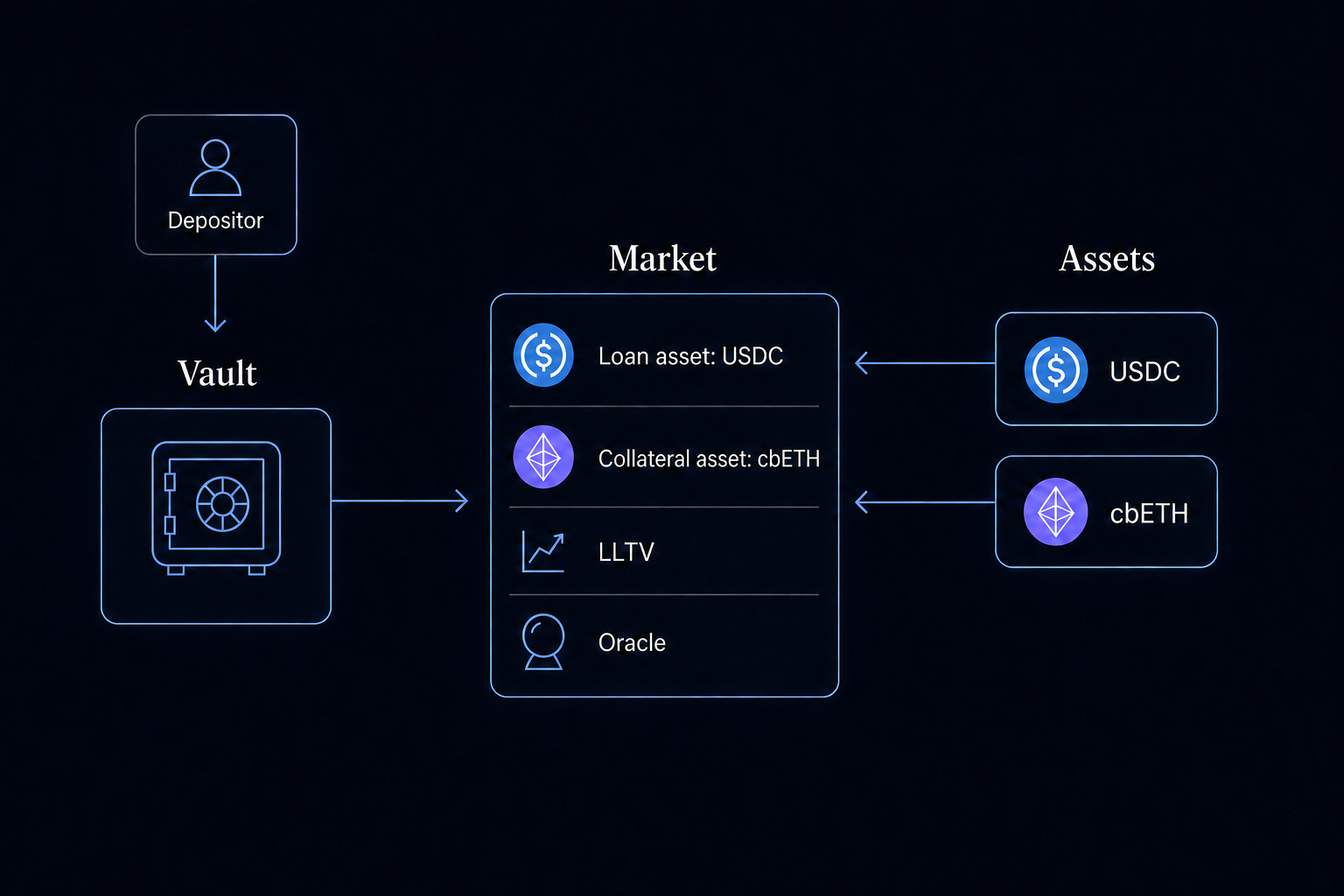
There are three useful pieces to keep in mind when thinking about Morpho: Assets, Markets and Vaults.
Assets can be used permissionlessly. Anyone creating a market can choose its loan asset and collateral asset.
Markets are also permissionless. A market creator chooses the assets, LLTV, interest-rate model and, importantly here, the oracle used to value the collateral.
Vaults sit one level above markets. Allocators choose which markets vault capital can enter and therefore which assets and market configurations depositors are exposed to.
Important take away: The relevant risk is whether the asset, market and vault are independently controlled. Common control is not yet conclusively established in this case.
Example
AZND/USDC was a Morpho market using:
There was also Alpha USDC Asia V2, a Morpho vault curated by AlphaPing, which allocated USDC into the market. Morpho described it as:
“Alpha USDC Asia V2 is a USD-denominated lending vault focused on allocating capital to overcollateralized credit markets with exposure to Asia-linked Real-World Assets RWA.”
Mu Digital publicly promoted the broader AZND/Morpho rollout, including Alpha USDC Asia V2 and strategies involving AZND.
At one point, the market had roughly 7.734m USDC supplied and almost exactly the same amount borrowed. Almost all of the supply came from Alpha USDC Asia V2 through its Morpho adapter.
One EOA, 0xe38a...Dc4C, represented effectively all of the borrowing against around 9.65m AZND collateral.
Worth noting as well, there was a hard-coded AZND/USDC oracle price, which should be immediately suspicious.
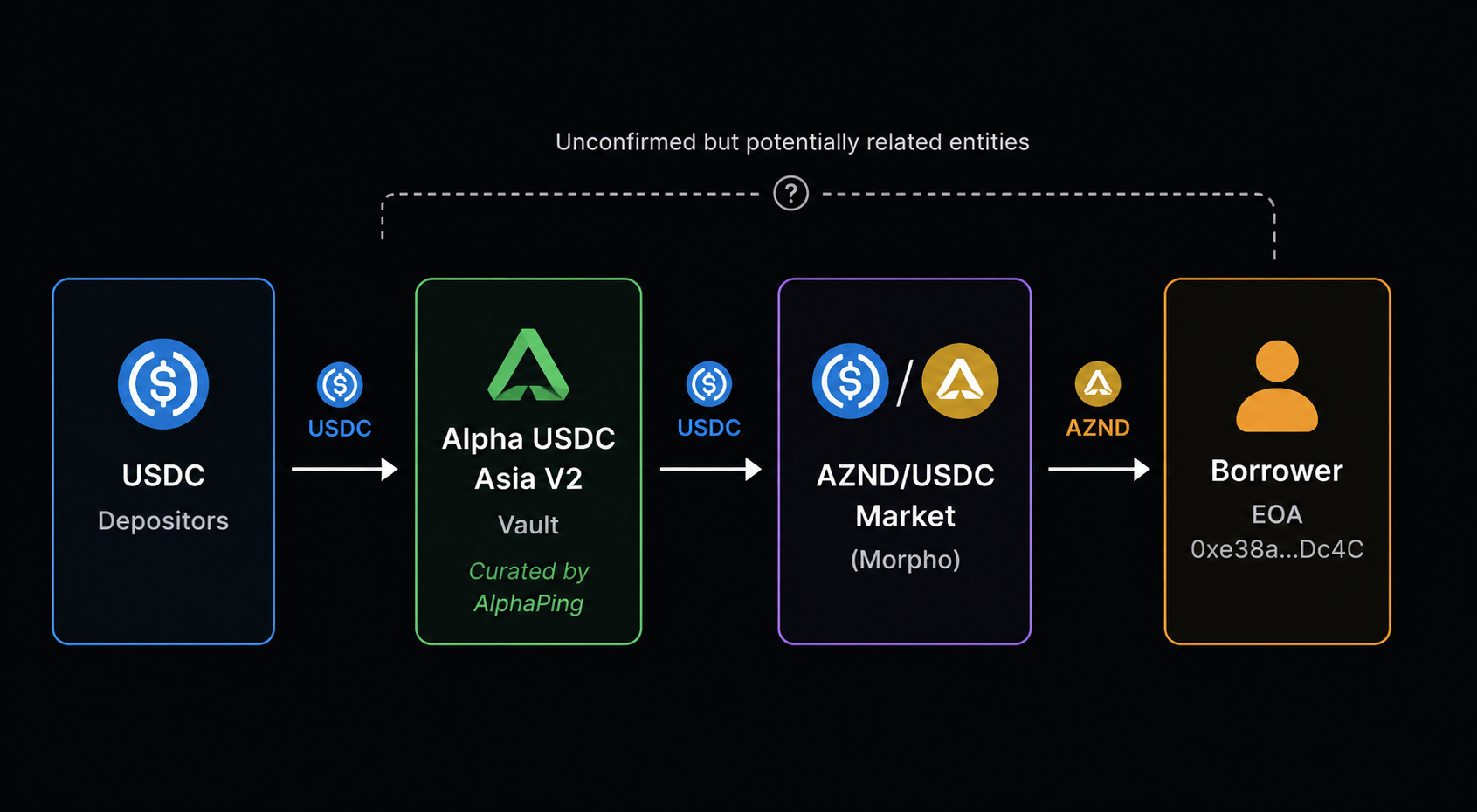
The central uncertainty is whether that one-dollar claim was a fair representation of AZND’s value. Because AZND represented an RWA, answering that question requires information about the offchain assets, legal claims and redemption process rather than the Morpho market alone.
If AZND could reliably be redeemed or sold for one dollar, borrowing USDC against it would not necessarily be a problem. It would be collateralised borrowing against a real-world asset.
If it could not, a borrower received USDC against collateral that may have been worth less than the market assumed, potentially leaving the original vault depositors exposed.